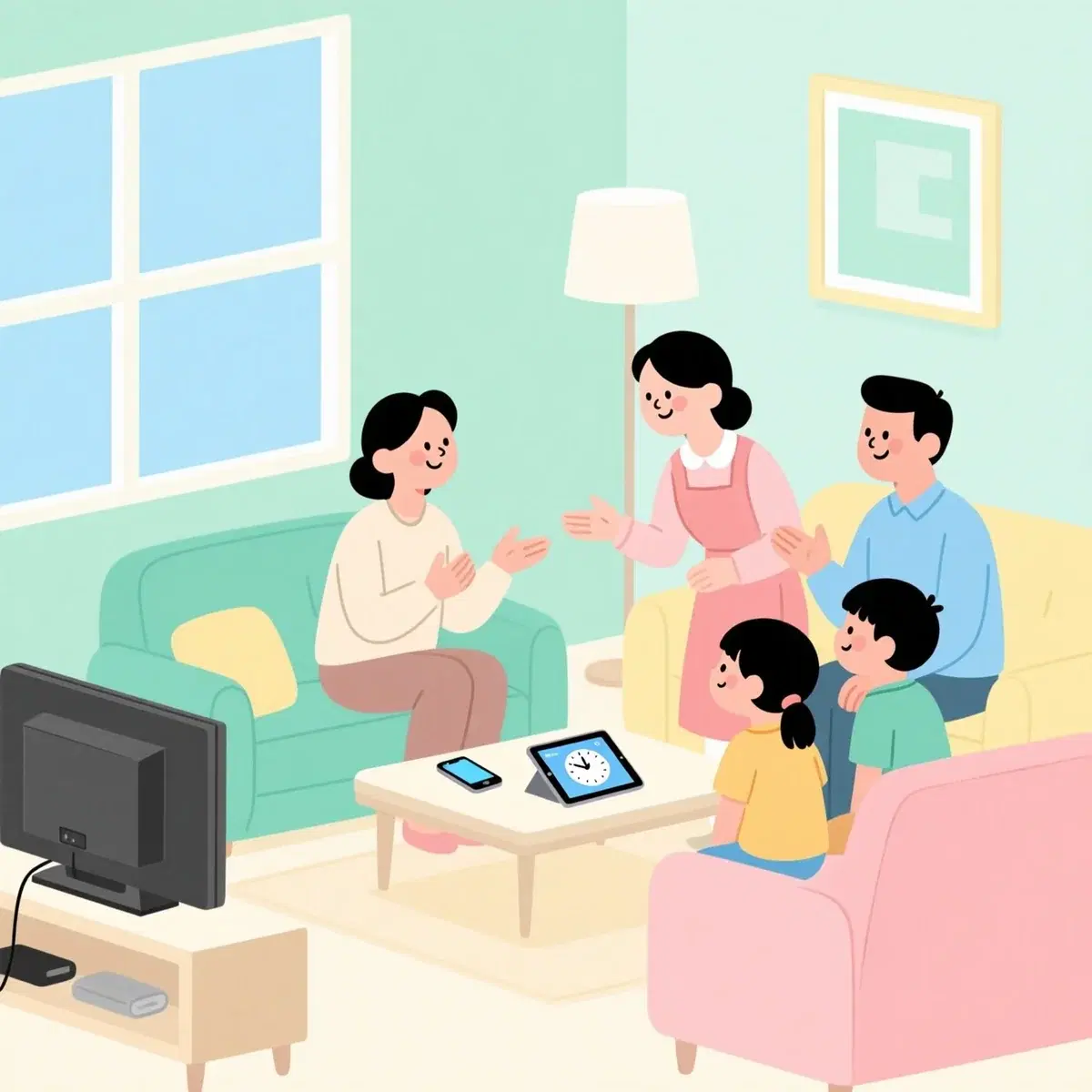
Employing a nanny in your home is both a responsibility and a privilege.
In today's digital world, that responsibility includes setting healthy boundaries around mobile phone and screen use - for both your nanny and your children.
A great working relationship depends on clarity, trust, and mutual understanding.
When a nanny is focused on their phone, attention drifts away from the children in their care, potentially compromising safety and developmental engagement.
Similarly, when children spend long periods in front of screens, their ability to focus, learn, and connect can be affected.
This article explores how to manage phone usage in your home, why it matters for child wellbeing, and how to communicate expectations confidently.
Why Screen Time Boundaries Matter
When hiring a nanny, it's essential to establish clear rules around mobile phone usage. In most workplaces, personal phone use is limited while on duty - childcare should be no different.
A nanny's role is to provide undivided attention to your child, ensuring their safety, emotional wellbeing, and growth. Phone distractions can reduce engagement and compromise the quality of care.
You can find more about employment standards and nanny responsibilities in our
UAE Nanny Sponsorship & Legal Guide and
Official UAE Domestic Workers Regulations.
The Risks of Mobile Phone Use Around Children
When hiring a nanny or maid, it is important to establish clear boundaries regarding mobile phone usage. In most professional settings, employees are not permitted to use their phones for personal reasons while on duty, and if caught doing so, they may face consequences. Childcare and housekeeping should be no different. Specifically, a nanny’s role is to provide undivided attention to the child, ensuring their safety, emotional well-being, and development. Using a phone while working, outside of necessary communication, distracts from these responsibilities and can compromise the quality of care provided.
In today's digital age, mobile phones are an integral part of daily life. However, their usage around children poses significant risks.
1. Lack of Supervision
When a caregiver is distracted by a mobile phone, they may miss important cues from a child, increasing the risk of accidents and emotional neglect. A study on caregiver supervision and injury risk found that phone distractions reduce vigilance, increasing the likelihood of accidents.
2. Reduced Interaction
Face-to-face interaction is vital for developing language, social, and cognitive skills.
Research on caregiver–child interaction quality showed that caregivers using mobile devices were less responsive and engaged in fewer shared attention moments.
3. Weakened Emotional Bonds
A UC Santa Barbara study revealed that frequent smartphone use around children negatively impacts their emotional intelligence and connection.
For related guidance, see:
- Nanny Training & Development Guide: Building Professional Skills
- Nanny Industry Insights – UAE Trends & Tips
Screen Time and Child Development: What the Research Says
Some caregivers use screens to calm or entertain children, but this can lead to developmental delays, sleep problems, and behavioural issues.
Research highlights:
- A JAMA Pediatrics study found that higher early-childhood screen time is linked to poorer language and cognitive outcomes.
- The American Academy of Pediatrics recommends no screen time under 18 months, except for video calls.
- NIH research (2019) found that children spending over two hours daily on screens perform worse on thinking and language tests.
- The University of Toronto linked excessive screen exposure to difficulties in social interaction and emotional regulation.
These findings reinforce the need to minimise screen exposure and encourage engaged, real-world play.
💡 Top 6 Activities Instead of Screen Time
How to Talk to Your Nanny About Screen Time
Addressing phone and screen use with your nanny requires balance, empathy, and structure.
1. Set Expectations Early
Include a clear mobile phone and screen time clause in the contract.
For example:
"Personal phone use is limited to breaks or emergencies only."
2. Be Specific About Child Screen Use
Outline what's acceptable (e.g. educational content only, for 30 minutes daily).
This helps maintain consistency when you're not home.
3. Explain Your Concerns
Share relevant studies and explain how presence and engagement affect development.
4. Encourage Alternatives
List preferred play activities like storytelling, puzzles, music, and outdoor games.
5. Provide Learning Opportunities
Invest in nanny training or local workshops - explore options in our
Nanny Training & Development Guide.
6. Reinforce Positively
Acknowledge and praise when your nanny follows guidelines.
Positive reinforcement encourages consistent behaviour.
Addressing Excessive Phone or Screen Use
If the problem continues:
- Reiterate the policy - remind politely and document the conversation.
- Model behaviour - children mirror adults, including parents' habits.
- Monitor discreetly - occasional drop-ins or nanny cameras can reassure.
- Provide a work phone - limit features to communication apps only.
- Reward compliance - small incentives reinforce commitment.
- Address violations - if issues persist, a written warning or new placement may be necessary.
Conclusion
While mobile phones are a necessity, their use should be managed thoughtfully in childcare.
Open communication, consistent boundaries, and mutual respect will help your nanny deliver focused, quality care.
By setting clear expectations early, you'll foster a home environment that prioritises your child's growth, learning, and emotional wellbeing.
🧠 Frequently Asked Questions
Further Reading on The Village