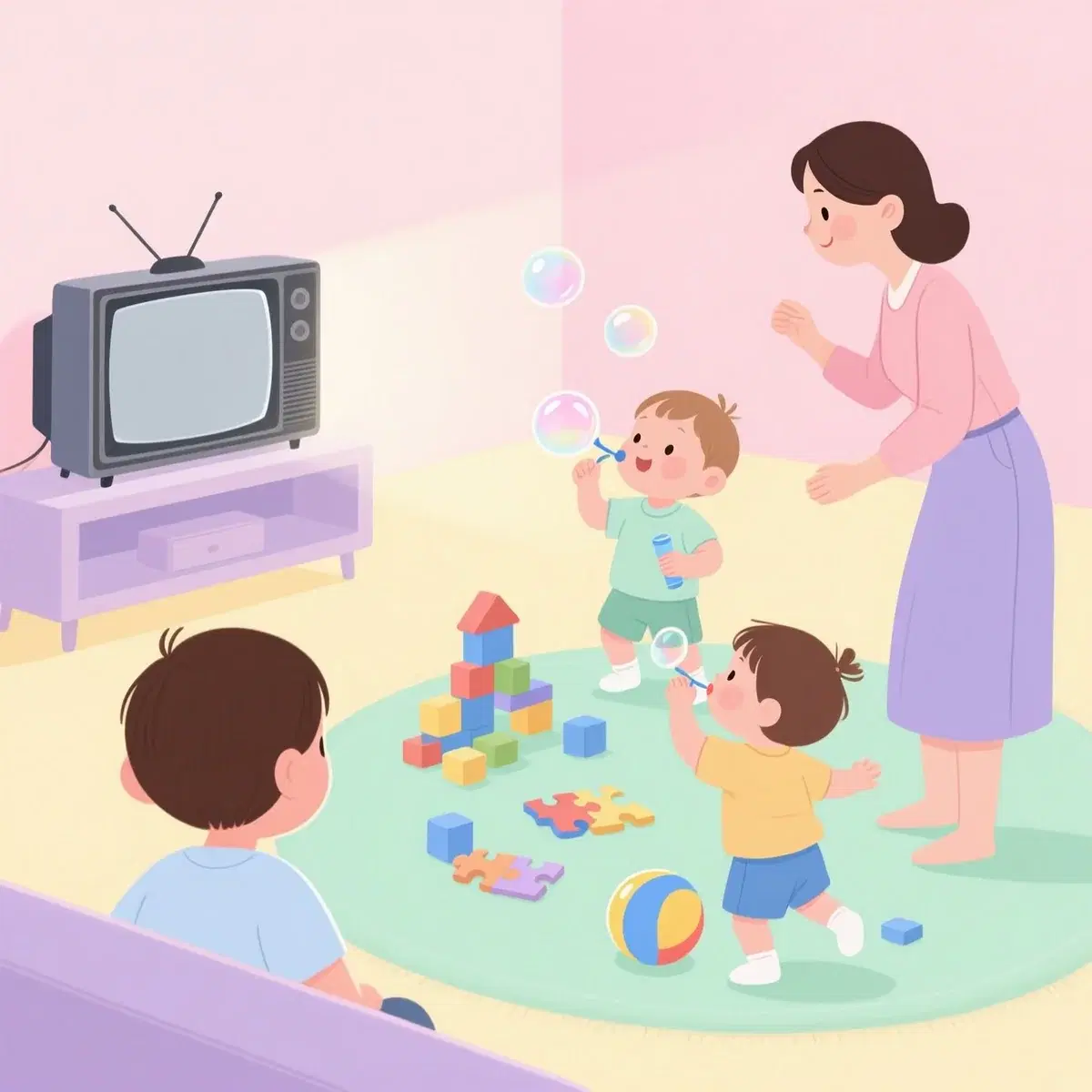
#Top 6 Screen-Free Activities to Replace Screen Time for Kids
Why Replace Screen Time with Engaging Activities?
Excessive screen time correlates with stronger associations to sleep problems, higher likelihood of obesity and lower cognitive/behavioral scores in young children.
By introducing well-designed, screen-free activities, caregivers and families can support healthy development, stronger attention, better social interaction and improved emotional regulation.
The Top 6 Screen-Free Activities
1) Outdoor Nature Play
- Scavenger hunts, texture walks, bug spotting: getting children outside is one of the most powerful alternatives to screen-heavy time.
- A study found that more outdoor play is linked to improved cognitive, social and emotional skills, helping offset screen time's negative impacts.
- UAE tip: Choose early morning or late afternoon outdoors to avoid midday heat.
2) Sensory & Tactile Exploration
- Play-dough, sand/water trays, tactile exploration boxes. Hands-on exploration builds attention and real-world learning.
- Research shows that toddlers exposed to higher screen time may have weaker visuo-tactile exploration techniques.
- Tip: Have your nanny or caregiver set up a "sensory station" with rotating materials.
3) Creative Arts & Storytelling
- Drawing, puppet shows, dress-up campaigns: these stimulate imagination, language, executive skills and require social interaction - something passive screens rarely provide.
- You can encourage your child (and nanny) to pick a "story theme of the week" and build a small performance or art piece.
4) Movement & Active Games
- Swap out sitting-still screens for obstacle courses, dance breaks, indoor/outdoor active play.
- Studies support that children who meet activity guidelines and limit screen time have better health & development outcomes.
- UAE-specific tip: Use indoor space creatively (balcony, living room) when outdoor play isn't possible.
5) Shared Projects & Purposeful Chores
- Simple cooking assignments, balcony gardening, building something together: these give children agency, connection & reduce reliance on screens for entertainment.
- This also strengthens the nanny-family-child dynamic: the caregiver becomes an activity partner rather than a monitor.
6) Board Games, Puzzles & Social Play
- Turn-taking, planning, cooperation: key for social-emotional growth and are great screen replacements.
- A parent-guide summary recommends non-digital games as strong alternatives to passive screen time.
- Tip: Make a "game drawer" with 5-10 varied options and let the child pick one daily.
How to Introduce These Activities Effectively
- Use transition time: Give a 5-minute warning before screen time ends, then propose the next activity.
- Involve the nanny/caregiver: Incorporate these activities into their routine and role description. They should know these are priority blocks just like supervising screen time.
- Rotate weekly: Change tactile materials, game sets and outdoor themes each week to keep novelty high and engagement strong.
- Positive reinforcement: Praise the child (and nanny) when they initiate or engage sincerely with these activities.
- Lead by example: As parents you model behaviour: if you are on your phone while child is playing, you send mixed signals.
🧠 Frequently Asked Questions
Alternatives include: outdoor nature play, sensory and tactile experiences, creative arts and storytelling, physical movement games, meaningful shared projects (with family or caregiver) and board games or puzzles. These support development more robustly than passive screen watching.
The American Academy of Pediatrics recommends no screen time under 18 months, except for video calls. NIH research (2019) found that children spending over two hours daily on screens perform worse on thinking and language tests.
As early as possible. Studies on children aged 0-5 show that higher screen time is associated with poorer outcomes (sleep, language, attention). So even toddlers benefit from structured tactile, social and outdoor activities rather than passive screen sitting.
No - screen time isn't automatically bad. It's more about how it's used, what it replaces, and whether it's supervised or interactive. But it should not replace real-world play, movement and social interaction.
Include clear expectations in the nanny's contract or role description about screen-free play and supervised activities. Provide training or resources (e.g., list of sensory materials, game ideas, outdoor play checklist), and ensure you schedule "activity blocks" the nanny is responsible for. Use positive reinforcement when the nanny leads an activity successfully.
Start by asking the child what they made, drew, or found during outdoor play, or which puzzle or board game they chose and how they cooperated. Encourage the nanny to send a weekly summary with photos or notes of screen-free activities. Set a measurable goal such as 30 minutes of outdoor nature play, 20 minutes of creative art, and 20 minutes of board games each day.
Related resources on The Village
- Screen Time and Your Nanny: Best Practices for Families in the UAE
- UAE Nanny Sponsorship & Legal Guide
- Nanny Training & Development Guide
Written by the WeNanny Editorial Team - supporting families and caregivers with evidence-based, actionable guidance for meaningful childhood engagement.